Why Nothing Worked for My Pregnancy Nausea (And What Finally Did)
If you've tried the crackers, the ginger tea, the small frequent meals, and you're still face-down on the bathroom floor — this is for you.
Because the standard advice isn't wrong exactly. It's just incomplete. And when you're dealing with persistent pregnancy nausea, incomplete doesn't cut it.
Here's what's actually going on.
Nausea Isn't One Thing
This is the part nobody tells you. Pregnancy nausea isn't a single problem with a single cause — it's usually several things happening at once, each feeding into the other.
Blood sugar instability
When you haven't eaten, your blood glucose drops, and nausea follows. This is why crackers before you get out of bed actually do help some women — you're stabilising blood sugar before your body has a chance to spiral. But if blood sugar is only one piece of your nausea puzzle, crackers alone won't get you far.
Rising hormone levels and liver burden
The surge of pregnancy hormones — particularly hCG and oestrogen — places a significant load on your liver, which is responsible for processing and clearing those hormones. When the liver is under pressure, nausea is one of the ways your body signals it. No cracker addresses that.
Slowed digestive transit
Progesterone relaxes smooth muscle — including the muscles of your digestive tract. Everything slows down. Food sits longer. You feel full, uncomfortable, and that full feeling can trigger nausea in its own right. But there's another layer to this that doesn't get talked about enough — if your bowels aren't moving regularly, your body isn't clearing waste products and used hormones efficiently. They get reabsorbed instead. That adds directly to the load on your liver, which is already working overtime processing pregnancy hormones. It becomes a cycle — sluggish digestion makes hormonal burden worse, which makes nausea worse.
Low stomach acid
Healthy digestion depends on adequate hydrochloric acid (HCl) in the stomach. During pregnancy, HCl levels can drop, meaning food isn't being broken down properly. Poor breakdown means poor absorption — and if you can't absorb the nutrients you're taking in, what's the point of taking them?
Histamine levels rising
This one is significantly underdiagnosed. Oestrogen stimulates histamine release, and histamine in turn stimulates more oestrogen — a cycle that can drive nausea, flushing, headaches and that general feeling of being unwell. If your nausea is persistent and nothing seems to touch it, histamine is often part of the picture.
Low vitamin B6
B6 is one of the most well-researched nutrients for pregnancy nausea and is often depleted in women who aren't absorbing well to begin with. It plays a direct role in neurotransmitter function and nausea regulation.
Why Ginger Helps But Often Isn't Enough
Ginger has genuine clinical evidence behind it for reducing nausea — I'm not dismissing it. But ginger works on one mechanism. If your nausea is being driven by histamine, low HCl, liver burden, and slowed transit simultaneously, ginger is doing one job while three others go unaddressed.
Same with crackers. Helpful for blood sugar. Useless for everything else.
And here's the thing about tablets and capsules specifically — when you're already nauseous, swallowing a large capsule can trigger the gag reflex before it's even had a chance to work. And if your stomach acid is low and your digestion is sluggish, absorption is compromised anyway. You could be taking the right things and still not getting the benefit.
What Actually Needs to Happen
For persistent pregnancy nausea, you need to look deeper than blood sugar and ginger. You need to support the whole digestive chain — from stomach acid production through to transit time — while also addressing the hormonal and histamine drivers that standard advice completely ignores.
That means:
- Stabilising blood glucose
- Supporting liver function and hormone clearance
- Addressing histamine
- Replenishing B6 in its most bioavailable form
- Restoring electrolyte balance
- Getting the gut moving at a healthy pace again
And ideally, doing all of that in a form your body can actually absorb — because none of it matters if it's just passing through.
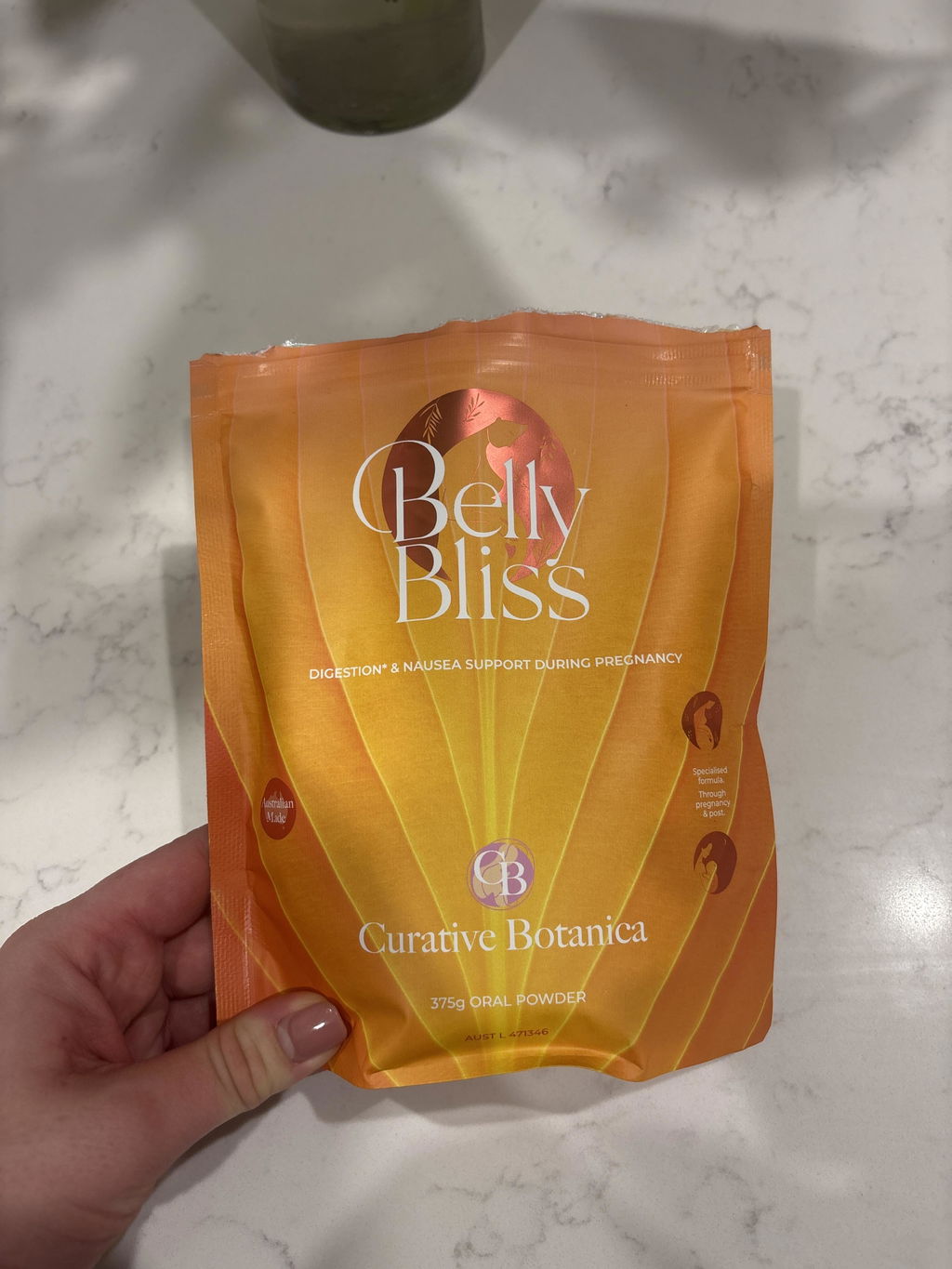
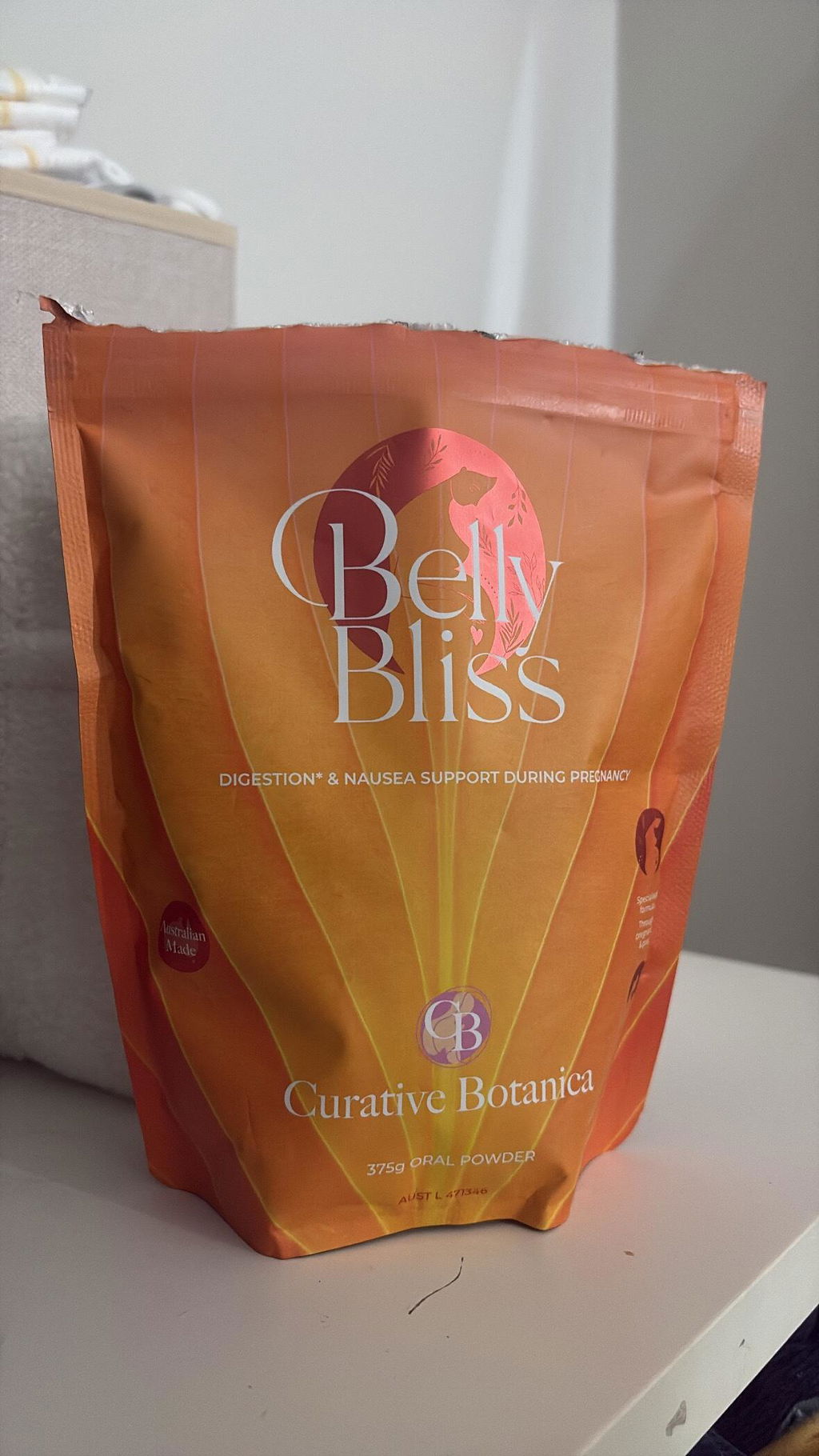
Why I Formulated Belly Bliss as a Powder
This wasn't accidental. Every decision came back to one question — what does a pregnant or postpartum woman actually need, and how do I make it as easy as possible for her to get it?
Because here's what I kept seeing in clinic: women doing everything right but drowning in products. A prenatal here, a magnesium there, a separate B6, a probiotic, a ginger capsule. Five different things to remember, five different things to swallow when you're already nauseous, five different things that were never designed to work together.
The mental load alone was exhausting. And most of these women were already running on empty.
I wanted to cover the most common — and most overlooked — causes of pregnancy nausea in a single daily formula. Something with targeted minerals, electrolytes, digestive support, B6 in its active form, prebiotics, and even a small amount of pea protein to help support blood sugar stability and keep energy steady throughout the day.
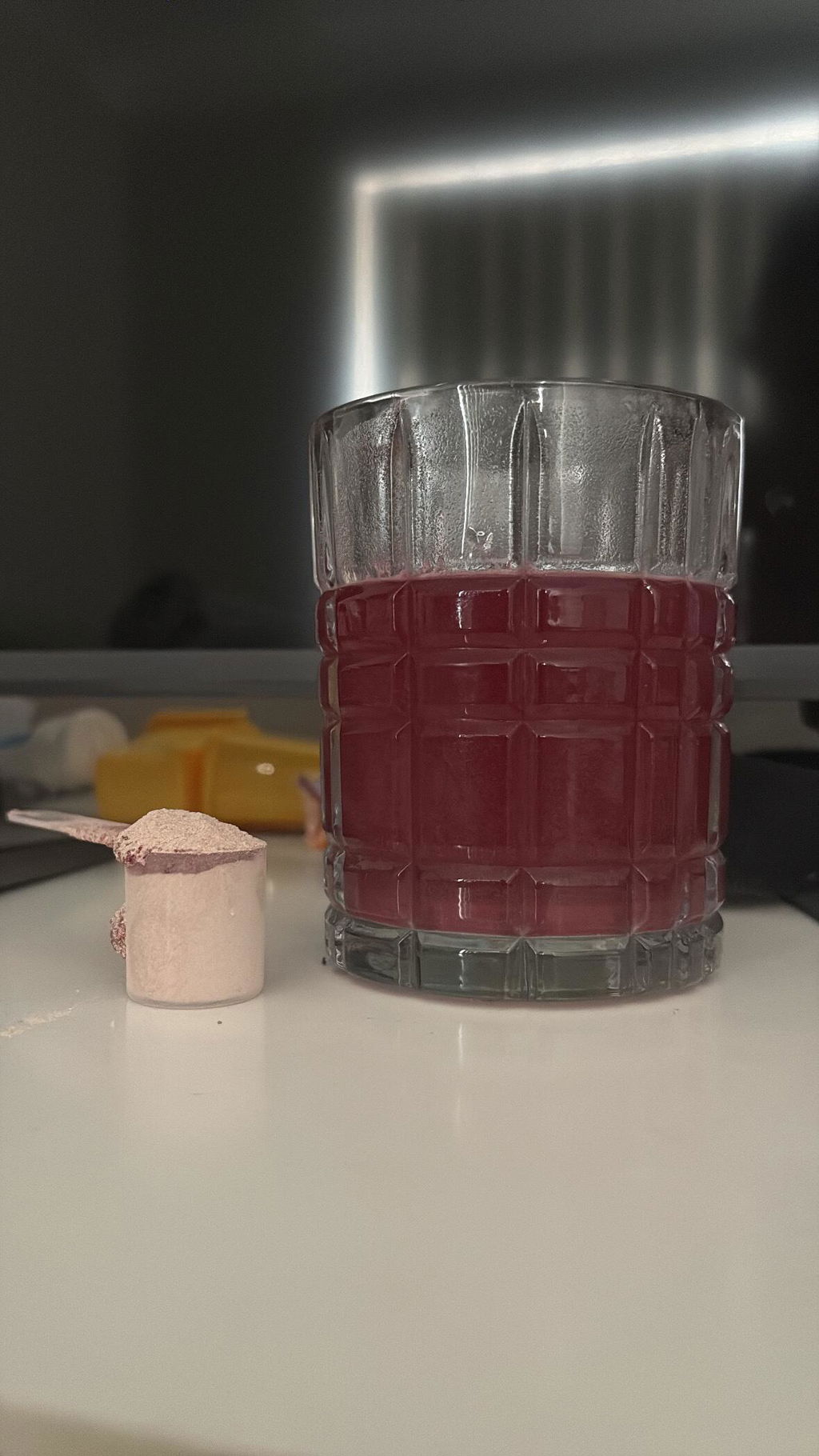
I also wanted it as a powder for a reason. A powder dissolves into water, which means no swallowing large tablets when you're already nauseous. It also means faster absorption — the nutrients reach your system without having to break down a capsule first. And powder form allows for higher doses of active ingredients than a tablet or capsule physically can — so instead of taking four tablets a day to hit a therapeutic dose, you get everything you need in two scoops, one glass, once a day. Higher bioavailability, gentler on a sensitive stomach, and a cold glass of something is a lot easier to get down than a handful of supplements when you're struggling.
Safe. Effective. Simple. A complete no-brainer to take every day.
Because mums always just get on with it. But we don't have to.
If you've been doing everything right and still feel terrible, it's not in your head and it's not your fault. Your body is asking for more targeted support than the standard advice can offer.
That's exactly what this was made for.
— Karlie