Why Pregnancy Reflux Happens Even When You Haven't Eaten
You've barely eaten anything today.
Yet somehow, your chest is burning, you're burping like an intoxicated sailor, and there's an uncomfortable sensation sitting right at the top of your stomach.
How can you possibly have reflux when there's barely anything in there?
Because pregnancy reflux isn't just about what you eat. It's also about what your hormones are doing to your digestive system.
Why does pregnancy cause reflux?
Let's talk about progesterone again.
During pregnancy, progesterone helps relax smooth muscle, including the lower oesophageal sphincter.
This muscular valve normally helps prevent stomach contents from travelling back into your oesophagus.
When it relaxes more frequently, stomach acid can move upwards, causing that familiar burning sensation.
As pregnancy progresses, the growing uterus can also increase pressure on the stomach, making reflux more likely.
But here's the important part.
You don't need a huge pregnant belly to experience reflux.
Hormonal changes can contribute to symptoms much earlier.
Why does reflux happen on an empty stomach?
Your stomach continues producing acid even when you haven't eaten.
And reflux is primarily about stomach contents moving in the wrong direction, rather than simply having too much acid.
An empty stomach doesn't prevent reflux episodes.
Some women also notice that nausea, irregular eating patterns and food aversions make their digestive symptoms harder to manage.
The result?
You're hungry, nauseous and experiencing reflux simultaneously.
Pregnancy really does know how to multitask.
Reflux and indigestion aren't exactly the same thing
Although they're often used interchangeably, reflux and indigestion can involve different processes.
Reflux typically involves stomach contents moving into the oesophagus, sometimes causing burning, regurgitation or a sour taste.
Indigestion, also called dyspepsia, can involve uncomfortable fullness, upper abdominal discomfort, burning or feeling excessively full after eating.
Understanding the difference matters because the most appropriate support depends on what's causing your symptoms.
Practical ways to support digestive comfort
- Eat smaller meals more frequently rather than having large meals.
- Avoid lying down immediately after eating. Allow approximately two to three hours before bed where practical.
- Identify your personal triggers, which may include fatty meals, spicy foods, caffeine or acidic foods.
- Try sleeping on your left side or elevating the head of your bed if night-time reflux is troublesome.
- Consider pregnancy-appropriate digestive support that addresses your symptoms, and check the product's indications and directions for use.
And please don't feel you need to survive on dry crackers for nine months. Adequate nutrition matters, too.
Where does Belly Bliss fit in?
As a naturopath, I think it's important to recognise that digestive symptoms rarely exist in isolation.
Nausea can affect food intake. Changes in bowel motility can contribute to bloating. Reflux can make eating uncomfortable.
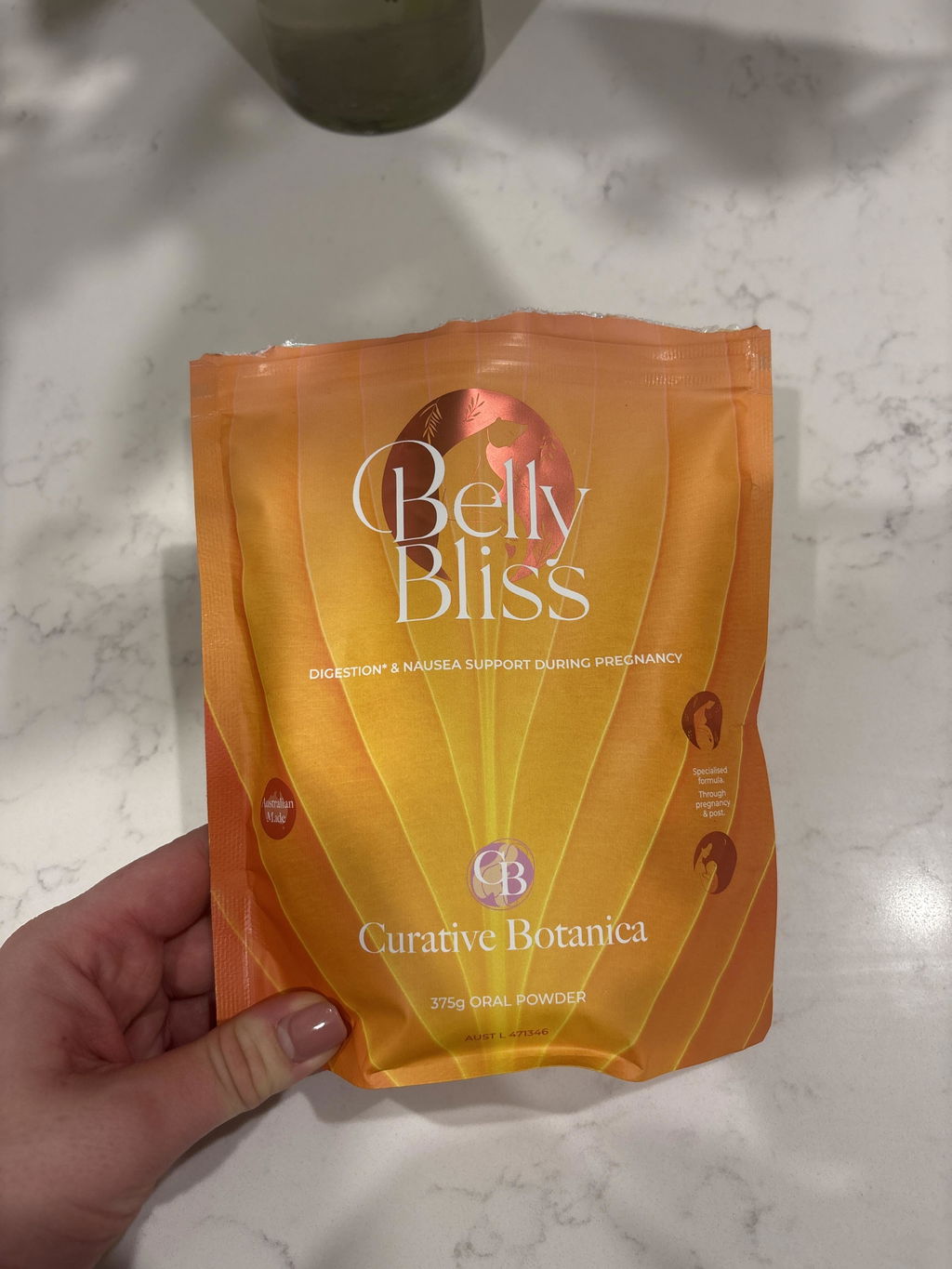
That's part of the thinking behind Belly Bliss: a naturopath-formulated powder that combines botanicals, prebiotic fibre and nutrients for maternal digestive support.
Belly Bliss has registered traditional Western herbal medicine indications for relieving symptoms of indigestion (dyspepsia) and digestive discomfort. That means its botanical digestive-support role is an important part of the formulation, not an afterthought.
With ingredients including ginger and chamomile alongside prebiotic fibre and nutrients, Belly Bliss was created to support women experiencing the digestive changes of pregnancy and postpartum. Its traditional herbal indications also include relief of abdominal bloating and cramping.
Reflux and indigestion can overlap, but they're not identical. Belly Bliss's registered indications address indigestion and digestive discomfort; they should not be interpreted as a claim to treat gastro-oesophageal reflux disease (GORD).
Because pregnancy already comes with enough surprises. Your digestive system doesn't need to provide the encore.
Support your digestion through pregnancy
Explore Belly Bliss and its combination of botanical and nutritional ingredients designed with the maternal journey in mind.
Persistent or worsening reflux, difficulty swallowing, vomiting blood or significant upper abdominal pain requires medical assessment. If symptoms persist, consult your healthcare professional.